
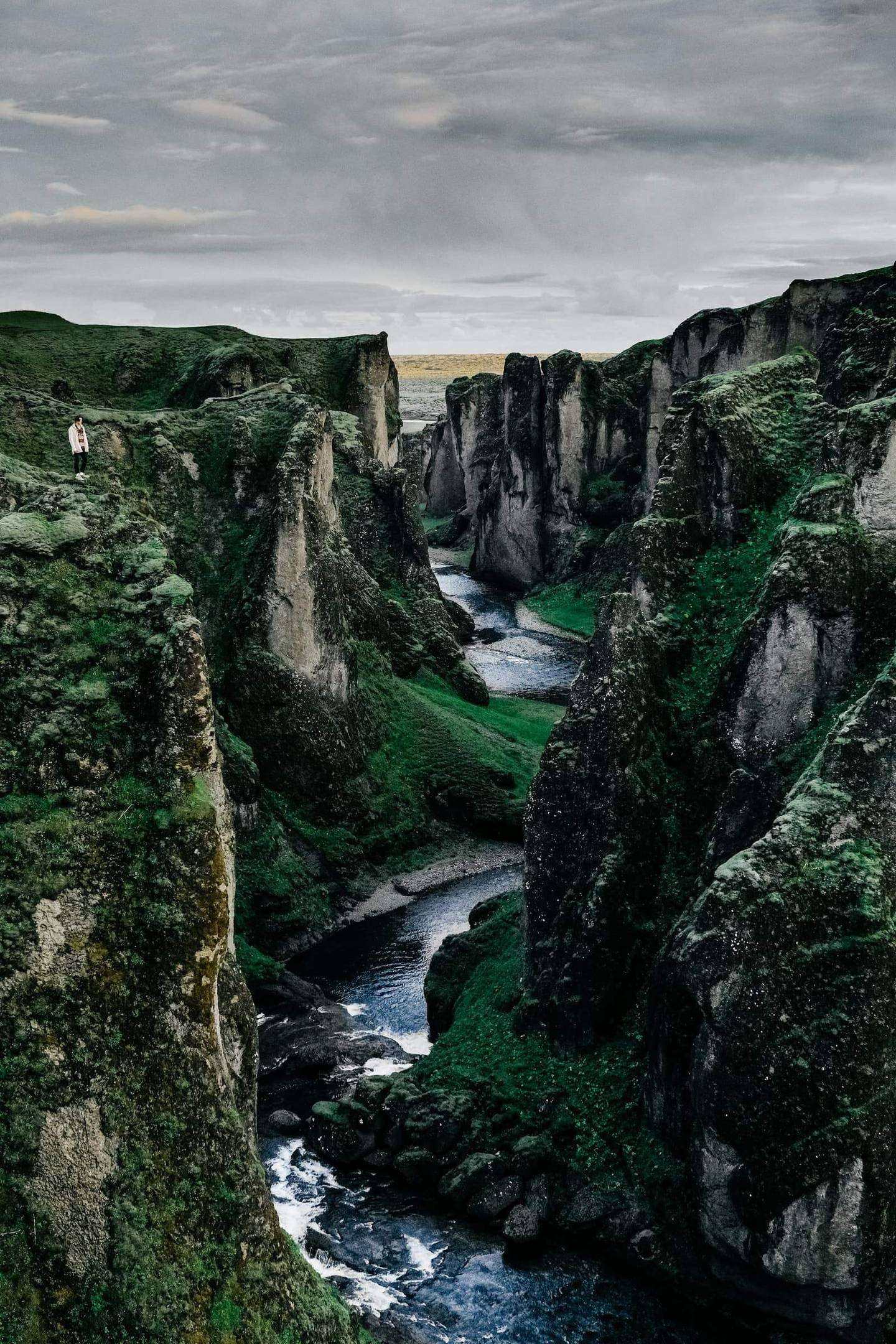
Iceland
The south coast: water, ice and black sand
One road, a few hours east of the capital, and in a single day the waterfalls, the black beaches and the edge of a glacier.
Why stop here
Everything here is made by the same few forces: glacial meltwater coming off the highlands, a sea that never stops, and volcanoes under the ice. The result is a coast of waterfalls that drop straight from old sea cliffs, black sand that is crushed lava, and glaciers that reach down to meet the road.
It is also the part of Iceland where the weather moves fastest, so a guide who reads the wind and the surf matters more here than anywhere.
What to see
- SeljalandsfossA waterfall of about sixty metres, with a path that goes behind the falling water.
- SkógafossA single sheet of water, sixty metres high and twenty-five wide, with a staircase beside it to the top.
- ReynisfjaraThe black sand beach at Vík, with basalt columns and sea stacks. The waves come further up the sand than they seem to; stay well back from the water.
- Sólheimajökull and JökulsárlónA glacier tongue you can see from the road, and further east the lagoon where icebergs break from Breiðamerkurjökull and drift to the sea.
What to taste
- Langoustine, landed at Höfn on the south-east coast.
- Lamb and potatoes from the farms along the road.
- Tomatoes grown under lights in greenhouses heated by geothermal water.
The light and the season
Long light May to Jul · Dark nights Sep to Mar. The northern lights usually reach here from about Kp 1; tonight's forecast is on the forecast page.
The northern lights forecast for The south coast Daylight in The south coast through the year
Questions people ask
Why visit The south coast?
One road, a few hours east of the capital, and in a single day the waterfalls, the black beaches and the edge of a glacier.
When is the best time to visit The south coast?
Long light May to Jul · Dark nights Sep to Mar. Dark nights mean at least six hours with the sun 12 degrees or more below the horizon in the middle of the month; midnight sun means the days when the sun does not set; long light means at least 18 hours of daylight in the middle of the month. Worked out from the sun's position.
What is The south coast known for?
Seljalandsfoss: A waterfall of about sixty metres, with a path that goes behind the falling water. Skógafoss: A single sheet of water, sixty metres high and twenty-five wide, with a staircase beside it to the top. Reynisfjara: The black sand beach at Vík, with basalt columns and sea stacks. The waves come further up the sand than they seem to; stay well back from the water. Sólheimajökull and Jökulsárlón: A glacier tongue you can see from the road, and further east the lagoon where icebergs break from Breiðamerkurjökull and drift to the sea.
Seeing The south coast with someone who knows it
The south coast is one of the places we build journeys around. If you would like to see it properly, a founder will tell you plainly what it gives you when you are there.